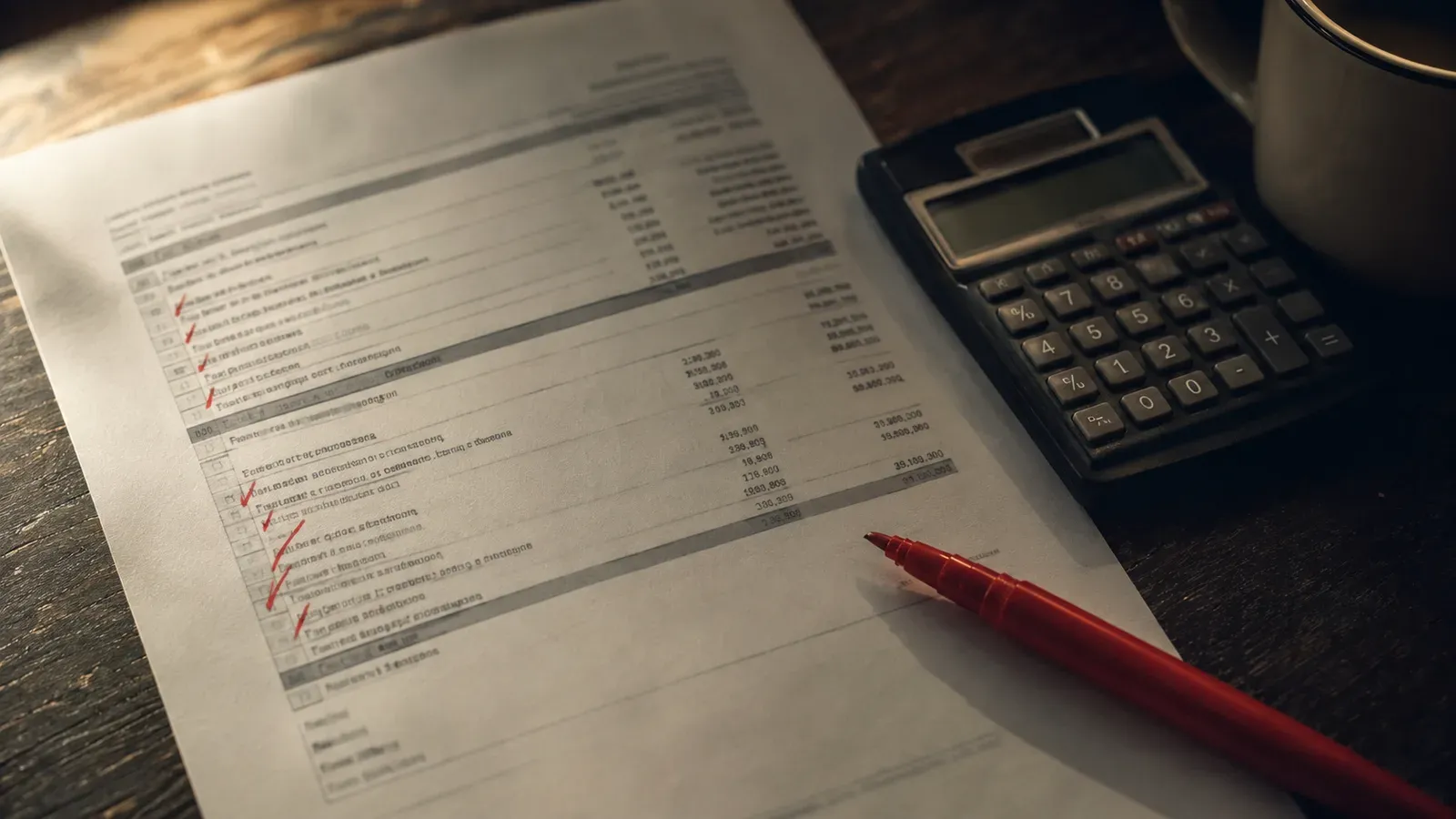
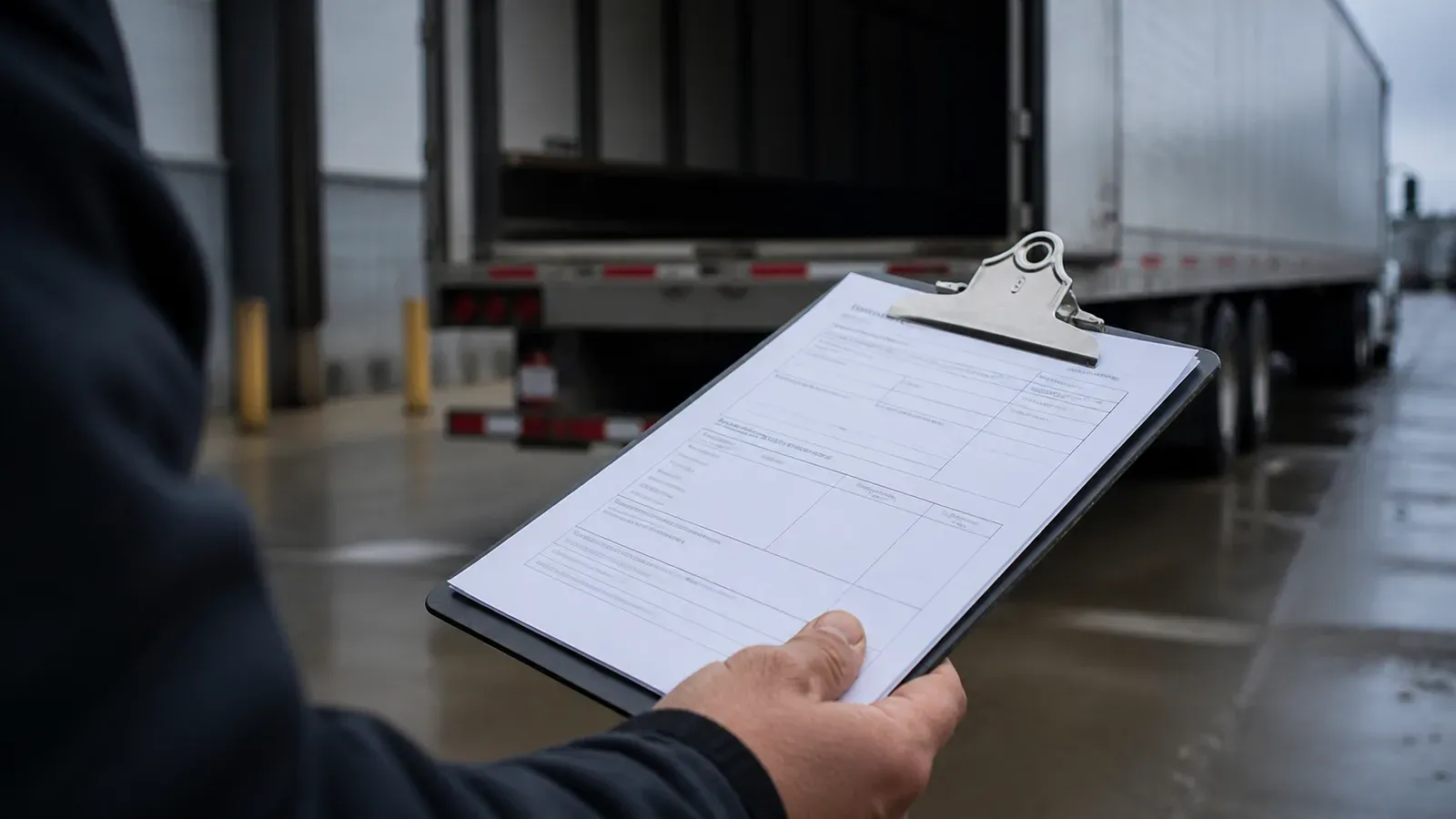
A carrier must pay a leased owner-operator within 15 days after the owner-operator submits the necessary delivery documents for a trip. That comes from the federal truth-in-leasing rule at 49 CFR 376.12(f). The critical detail: the 15-day clock starts at document submission, not at delivery — so paperwork sitting in your cab is your money sitting still.
A carrier must pay a leased owner-operator within 15 days after you submit the necessary delivery documents for a trip. That deadline is federal, from the truth-in-leasing rule at 49 CFR 376.12(f), and the exact language matters more than most owner-operators realize:
“The lease shall specify that payment to the lessor shall be made within 15 days after submission of the necessary delivery documents concerning a trip in the service of the authorized carrier.”
Notice what the clock is attached to. Not delivery. Not the receiver’s signature. Not the end of the week. Submission of the necessary delivery documents. Everything else on this page follows from that phrase.
General information, not legal advice. Leases differ, and a payment dispute is a contract dispute. For real money on the line, talk to a transportation attorney or to OOIDA.
How long does a carrier have to pay an owner-operator?
Fifteen days from document submission. Three things worth pinning down:
- This is a ceiling, not a target. Plenty of carriers pay weekly, or quick-pay in 48 hours for a fee. Nothing stops a carrier from paying faster; the rule stops it from paying slower.
- The obligation runs through the lease. 376.12(f) requires the lease to specify the 15-day term, so the first place to look is your own lease — and a clause that is missing, vague, or written longer is a finding in itself.
- It applies per trip, tied to “a trip in the service of the authorized carrier,” not to a month-end reconciliation.
For the wider set of protections your lease must contain, truth-in-leasing explained walks through all of them. The payment deadline makes far more sense next to the compensation, freight-bill, and chargeback rules around it.
Why the 15 days start at submission, not delivery
This is the most valuable thing to understand about owner-operator pay, and where a lot of money quietly goes.
The regulation ties payment to the moment you hand over the paperwork, so the part of the timeline you control is the part that decides when you get paid. A load delivered on the 3rd with a trip envelope that sits behind your visor until the 12th is not a 15-day load — it is a 24-day load, and those nine days are on you.
The reverse is a real risk too. A carrier that wants to stall has an obvious lever: declare the submission incomplete. You sent the signed BOL on the 10th; on the 22nd billing says it also needed some other form, so the carrier says the clock started on the 22nd. You are now on day 3 of a load you delivered three weeks ago.
The regulation is on your side here, and it is worth knowing why. Because 376.12(f) caps required pre-payment documentation at DOT logs plus what the carrier needs to bill the shipper, a demand for something outside that list does not legitimately restart your 15 days. It is still an argument you may have to make — but you are making it from the stronger position.
Two habits close the gap:
- Get the document list in writing, ideally in the lease. A finite, named list is the difference between a deadline and a moving target — and if the list runs well past DOT logs and billing paperwork, that is worth questioning before you sign.
- Submit everything at once and timestamp it. Scan the whole packet, send it in one upload, keep the confirmation. “Submitted 3/10, 4:42 PM, all documents” ends the argument before it starts.
What counts as “necessary delivery documents”?
Here is the part most drivers — and plenty of carriers — get wrong. The regulation puts a ceiling on what can be demanded before you get paid. 49 CFR 376.12(f) states that the documentation required before the lessor can receive payment “is limited to log books required by the Department of Transportation and those documents necessary for the authorized carrier to secure payment from the shipper.”
That is a short list, and it is a limit, not a starting point. The same subsection goes further: the carrier “may require the submission of additional documents by the lessor but not as a prerequisite to payment,” and it “shall not set time limits for the submission by the lessor of required delivery documents.”
So the honest answer to “what counts?” is two things: your DOT-required logs, and whatever the carrier genuinely needs to bill the shipper. A carrier can ask for more paperwork — its own trip sheet, a packet cover form — but it cannot hold your money hostage to it. What follows is how that plays out in practice.
| Document | Part of the required submission? | Why it matters to the clock |
|---|---|---|
| Signed bill of lading / proof of delivery | Yes — the core document | Proves the trip was completed; nearly every lease names it |
| Separate delivery receipt | Yes, where the consignee issues one | Missing it is a common “incomplete” claim |
| Lumper receipts | Yes, if you’re seeking reimbursement | No receipt, no reimbursement — and a missing one is often called an incomplete packet |
| Scale tickets | Often, on weight-sensitive freight | Supports billable weight and weight-based accessorials |
| Detention / accessorial documentation | Often, where the lease names it | Undocumented detention becomes unpaid detention |
| Trip sheet or packet cover form | Can be requested — but not as a condition of payment | 376.12(f) lets the carrier require additional documents “but not as a prerequisite to payment” |
| Rate confirmation | Usually not — the carrier already has it | Include it anyway if the lease asks |
| Rated freight bill | No — the carrier owes this to you | Under 376.12(g), on percentage pay it comes before or at settlement |
| Fuel receipts for IFTA | No — tax recordkeeping, not delivery documentation | Keep them, but they aren’t trip delivery documents |
| Your DOT-required logs / ELD records | Yes — named in the regulation itself | 376.12(f) expressly lists DOT-required log books as documentation that may be required before payment |
The test is not “is it named in my lease?” — it is whether the document is a DOT-required log or something the carrier genuinely needs to bill the shipper. A carrier that withholds payment over its own internal form, produced weeks later as the reason your packet was “incomplete,” is doing the one thing 376.12(f) says it may not do. Push back in writing, and quote the subsection.
Worked example: delivered March 3, submitted March 10
You haul a load that pays $2,400. Your lease pays 70% of the linehaul, so your share is $1,680. You also paid a $150 lumper at the receiver and have the receipt.
- March 3 — You deliver. The consignee signs the BOL. Nothing has started yet.
- March 10 — You scan the signed BOL and lumper receipt and upload the complete packet at 4:42 PM, saving the confirmation. This is day 0.
- March 25 — Fifteen days from submission. The $1,680 plus the $150 lumper reimbursement is due no later than this date.
Notice what those seven idle days cost you: nothing in rights, but a full week of your own cash flow. Submit on March 3 and the deadline is March 18.
Now change one fact. Suppose you sent only the BOL on March 10, and on March 21 the carrier says the lumper receipt was also required. If the lease names lumper receipts, the carrier has a real argument. If it doesn’t, the carrier is inventing a requirement after the fact, and a dated written objection is the right response. Either way, the packet-in-one-upload habit prevents the scenario.
What if you’re paid a percentage of the revenue?
Then you are entitled to see the number your percentage is calculated from. Under 49 CFR 376.12(g), when compensation is based on a percentage of the revenue for a shipment, the lease must specify that the carrier will give you a copy of the rated freight bill, before or at the time of settlement. Not on request. Not if you complain. Before or at settlement.
That matters because a percentage without the rated freight bill is not verifiable — it is a number the carrier tells you. Above, 70% of $2,400 is $1,680. But 70% of what the carrier decided to call linehaul after its own deductions could be anything.
Check the deduction side too. Under 376.12(h), the lease must clearly specify all items the carrier may initially pay for and ultimately deduct from your compensation — carrier settlement deductions covers how to read those lines. Under 376.12(d), the amount to be paid for the equipment and your services must be clearly stated on the face of the lease or an attached addendum, so compensation terms are never something you reconstruct from settlements. And 376.12(i) requires the lease to specify that you are not required to purchase or rent products, equipment, or services from the carrier as a condition of entering it.
Does the 15-day rule apply to company drivers?
No. Worth saying plainly, because many people searching this question are company drivers and this page is not their answer.
49 CFR Part 376 governs the lease between an authorized motor carrier and an owner-operator who leases equipment to that carrier. It is a leasing regulation — not a wage-and-hour law. It does not set paydays for W-2 employees, and it does not govern final paychecks, withheld bonuses, or unpaid detention for company drivers.
If you drive the company’s truck for wages and your paycheck is late, your remedy is your state labor department’s wage-payment rules. Most states set their own deadlines for regular and final pay, and many provide a free administrative wage-claim process. FMCSA has no jurisdiction over your paycheck.
The test is not what the carrier calls you or whether you get a 1099 — it is whether you leased equipment to an authorized carrier under a written lease.
The carrier is past 15 days. Here’s your escalation path.
Work these in order. Most disputes resolve in the first two steps, and those steps make the later ones possible.
1. Build the file first. For each unpaid trip: the load number, the delivery date, the submission date with proof (email timestamp, portal confirmation, certified mail receipt), the documents you sent, the rate confirmation, and the amount owed. Add the signed lease. Export anything living only in the carrier’s portal — that access vanishes when the relationship sours.
2. Send a dated written demand. Email and certified mail, factual: each trip with its submission date and the deadline that ran from it, the citation (49 CFR 376.12(f)), the total owed, a request for rated freight bills under 376.12(g) if you’re on percentage, itemized support for any deduction under 376.12(h), and a response date. A demand quoting the regulation with dated proof is treated very differently than a phone call.
3. Call OOIDA. The Owner-Operator Independent Drivers Association handles leasing and payment disputes constantly and can tell you whether this is unusual or a known pattern with that carrier.
4. File with FMCSA. Commercial leasing complaints go through the National Consumer Complaint Database at nccdb.fmcsa.dot.gov. It creates a federal record tied to the carrier’s DOT number, but it is not a collections agency. File it anyway — patterns across multiple complaints get noticed.
5. Consult a transportation attorney. For a single load, small claims court is often faster and cheaper. For a string of unpaid loads, or a carrier showing signs of financial trouble, get advice quickly — timing matters when a carrier is failing.
If you are considering leaving, read what to do when a carrier holds your final settlement first — and know your escrow has its own federal deadline, 45 days from termination.
How to make the clock start on time, every time
The good news: almost all of the practical fix is on your side of the line.
- Submit the day you deliver. Scan the packet at the receiver, before you roll. Every day you wait is a day of your own money delayed.
- Send everything in one submission. Partial packets are what “incomplete” arguments are built on.
- Keep timestamped proof. One file per trip, named by load number — the evidentiary basis for any future claim.
- Reconcile every settlement against your rate cons. Catch the missing accessorial in week one, not at year-end.
- Know your lease’s document list — and know its ceiling. Read the list, but remember 376.12(f) caps what can gate payment at DOT-required logs plus what the carrier needs to bill the shipper. A lease that makes payment conditional on anything beyond that is asserting more than the regulation allows.
Carriers that pay cleanly have one thing in common: the settlement is generated from the same system that received the paperwork, so submission dates, deductions, and pay live in one record instead of three inboxes — the model behind a purpose-built driver settlement workflow. The driver settlements guide covers what a statement must show for both sides to trust it, and is a reasonable thing to forward to a back office whose settlements are a monthly mystery.
Frequently asked questions
How long does a carrier have to pay an owner-operator? 15 days. Under 49 CFR 376.12(f), the lease must specify that payment to the lessor is made within 15 days after submission of the necessary delivery documents for a trip in the carrier’s service. The clock runs from submission, not delivery.
Does the 15-day clock start when I deliver the load? No. It starts when you submit the necessary delivery documents for that trip. Deliver on the 3rd, send paperwork on the 10th, and the clock started on the 10th.
What counts as “necessary delivery documents”? 49 CFR 376.12(f) limits it: the documentation required before you can be paid is limited to log books required by the Department of Transportation and those documents necessary for the carrier to secure payment from the shipper. In practice that means your DOT logs plus the billing paperwork — the signed bill of lading or proof of delivery, and items like lumper receipts or scale tickets where they support the invoice. A carrier may ask for additional documents, but not as a prerequisite to payment.
I’m paid a percentage of the load. What am I entitled to see? A copy of the rated freight bill. Under 49 CFR 376.12(g), when compensation is a percentage of a shipment’s revenue, the lease must specify that the carrier gives you the rated freight bill before or at settlement.
Does the 15-day rule apply to company drivers? No. Part 376 governs the lease between an authorized carrier and an owner-operator who leases equipment to it. It is not a wage law and does not set paydays for W-2 company drivers, who should go to their state labor department’s wage-payment rules instead.
Can the carrier hold my pay because of a cargo claim or chargeback? Only for items the lease authorizes. 376.12(h) requires the lease to clearly specify every item the carrier may initially pay for and ultimately deduct from your compensation. A deduction on a settlement but not in your lease is one to challenge in writing.
The carrier is past 15 days. What do I do? Send a dated written demand naming the submission date, the 15-day deadline, the load numbers, and the amount owed. If that fails, escalate to OOIDA, file through FMCSA’s National Consumer Complaint Database, and consult a transportation attorney.
The short version
Fifteen days from submission, per trip, and the lease has to say so. Your leverage is almost entirely in the paperwork: submit complete, submit immediately, keep timestamped proof. Then check the math against the rated freight bill and every deduction against the lease.
For the other federal deadline that matters when you leave a carrier — the 45-day escrow return — read how long a carrier has to return escrow, and browse the driver and owner-operator library for the rest.
Note: This article is for general informational purposes and reflects regulations as of its publish date. It is not legal advice. Always confirm current requirements with the FMCSA and the eCFR, or your safety department.